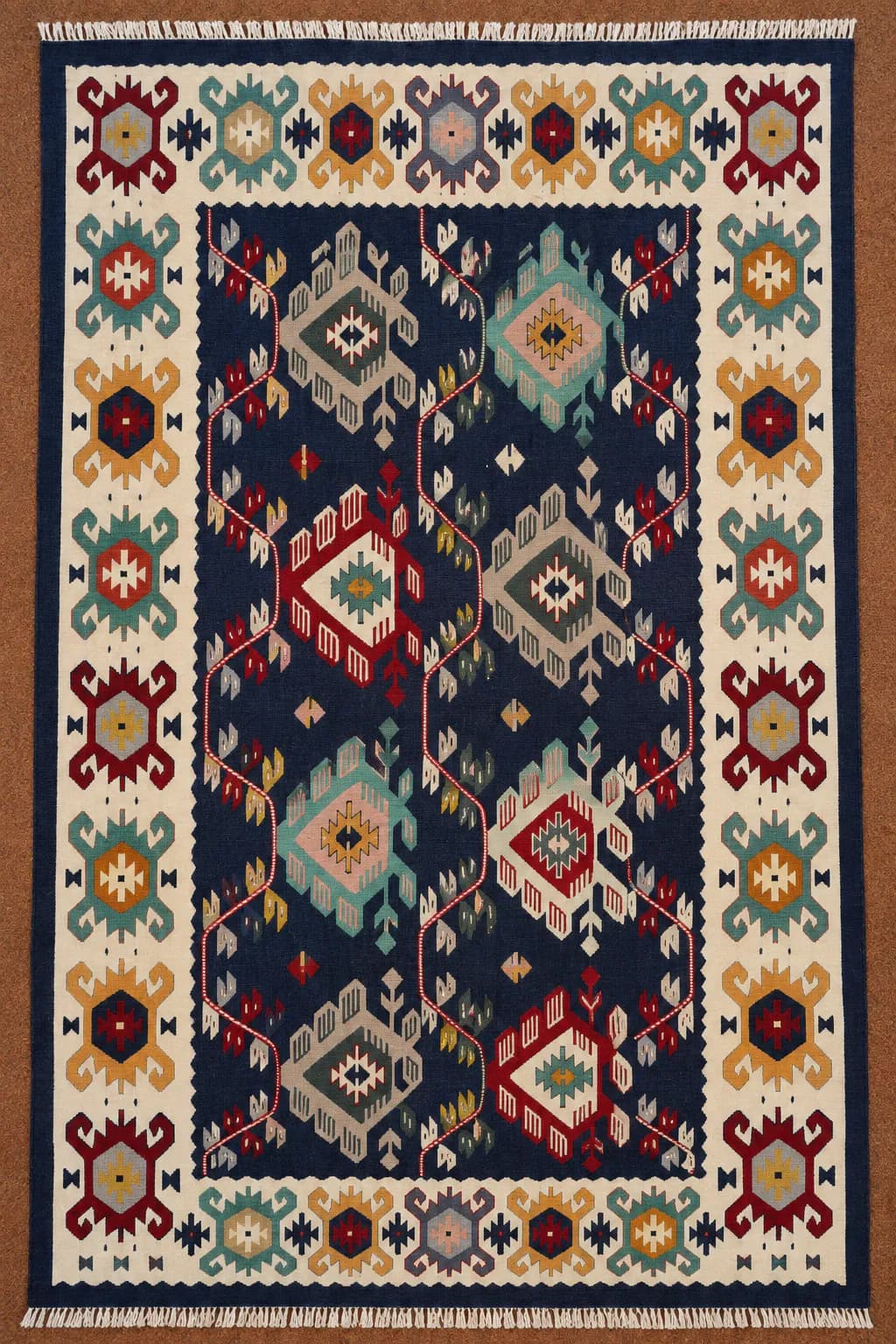
Tribal / folk-inspired geometric Kilim ( Motif )
Afghanistan · 4' × 6'
Rs 35,000
Collection
Flatwoven, reversible, and lighter than a knotted rug. Geometric, plain-spoken, and the most forgiving thing to live with.
13 pieces · page 1 of 2
Afghanistan · 4' × 6'
Rs 35,000
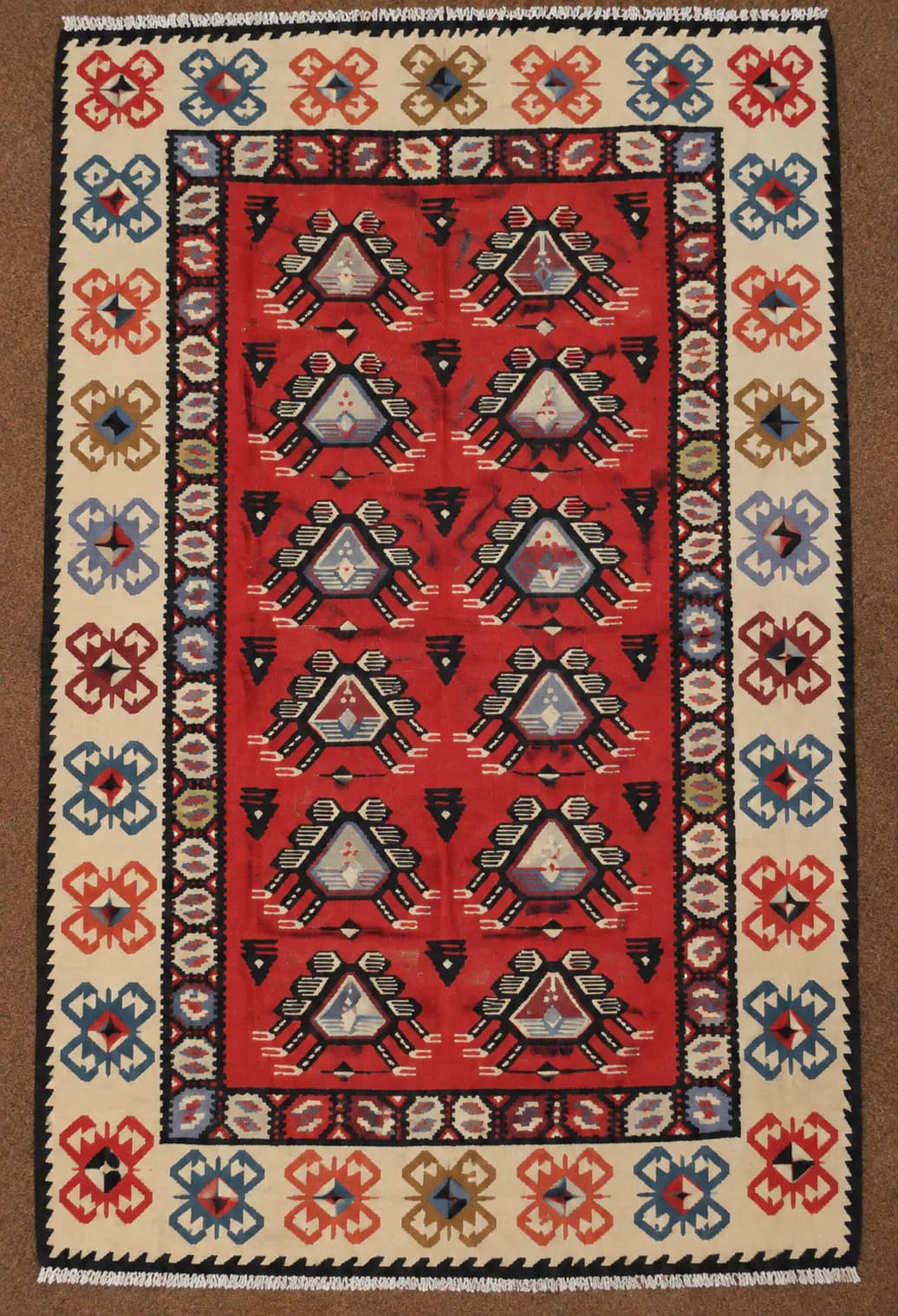
Southwestern Asia · 3' × 6'
Rs 35,000
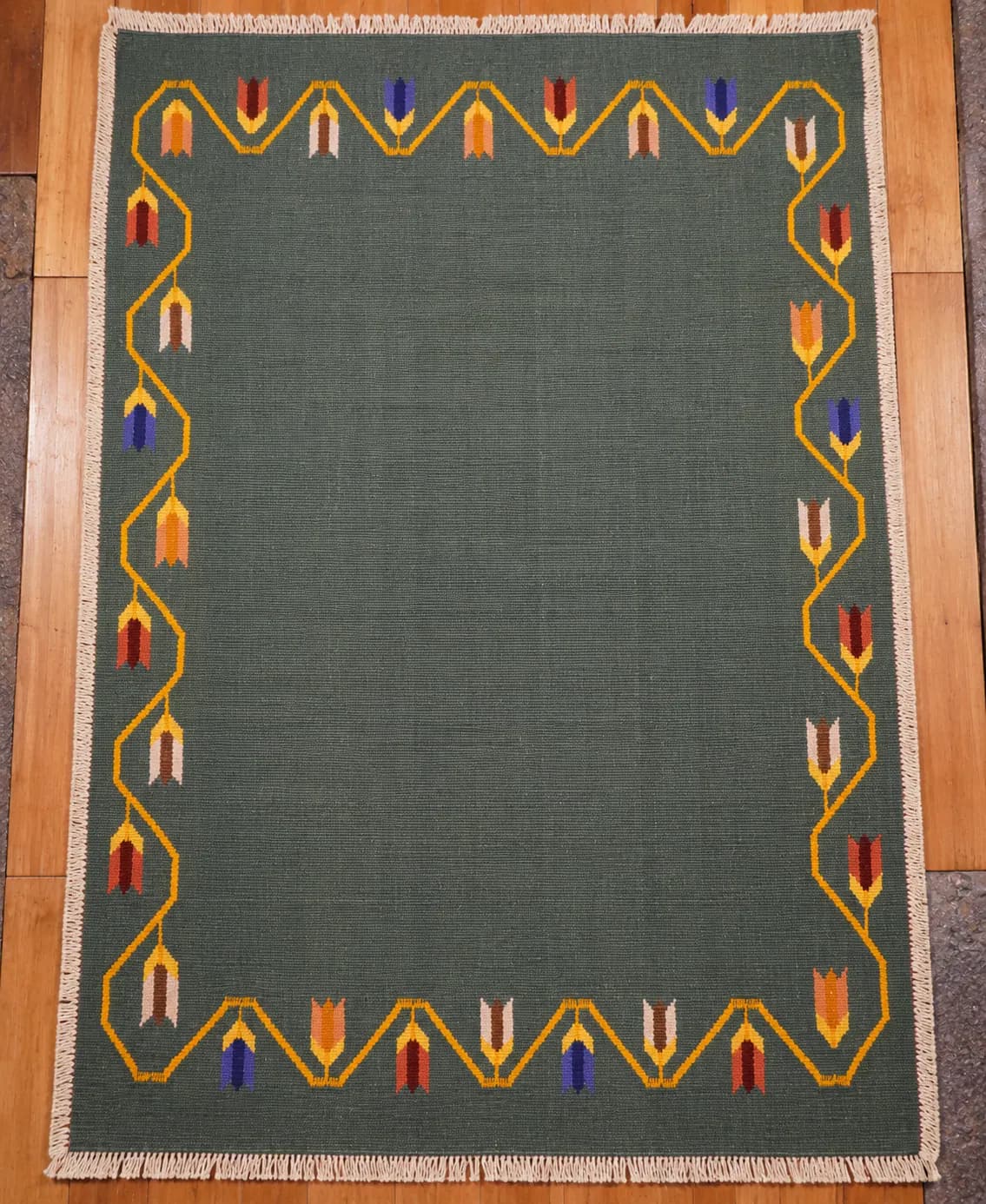
Southwestern Asia · 6' × 8'
Rs 60,000
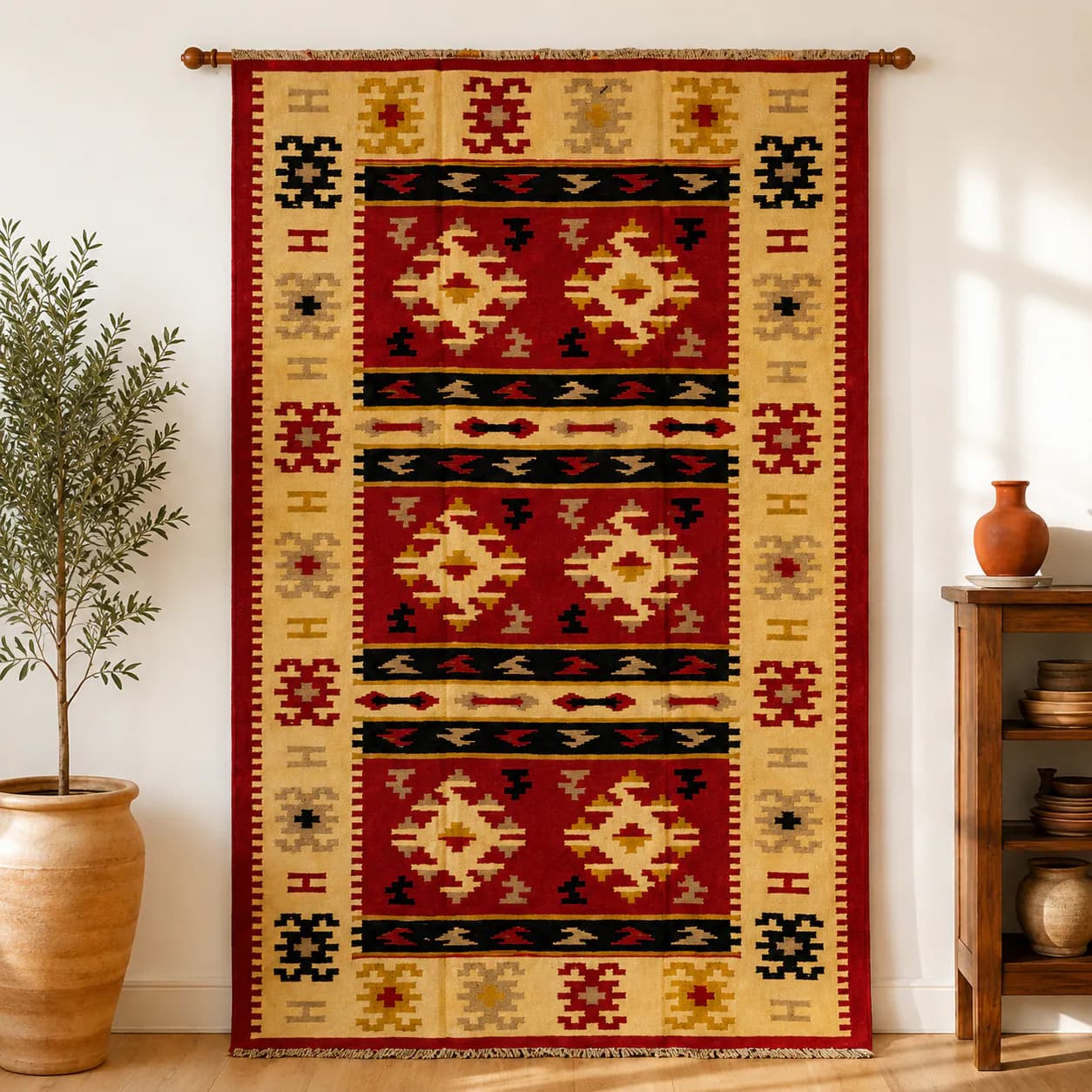
Afghanistan · 5' × 7'
Rs 50,000
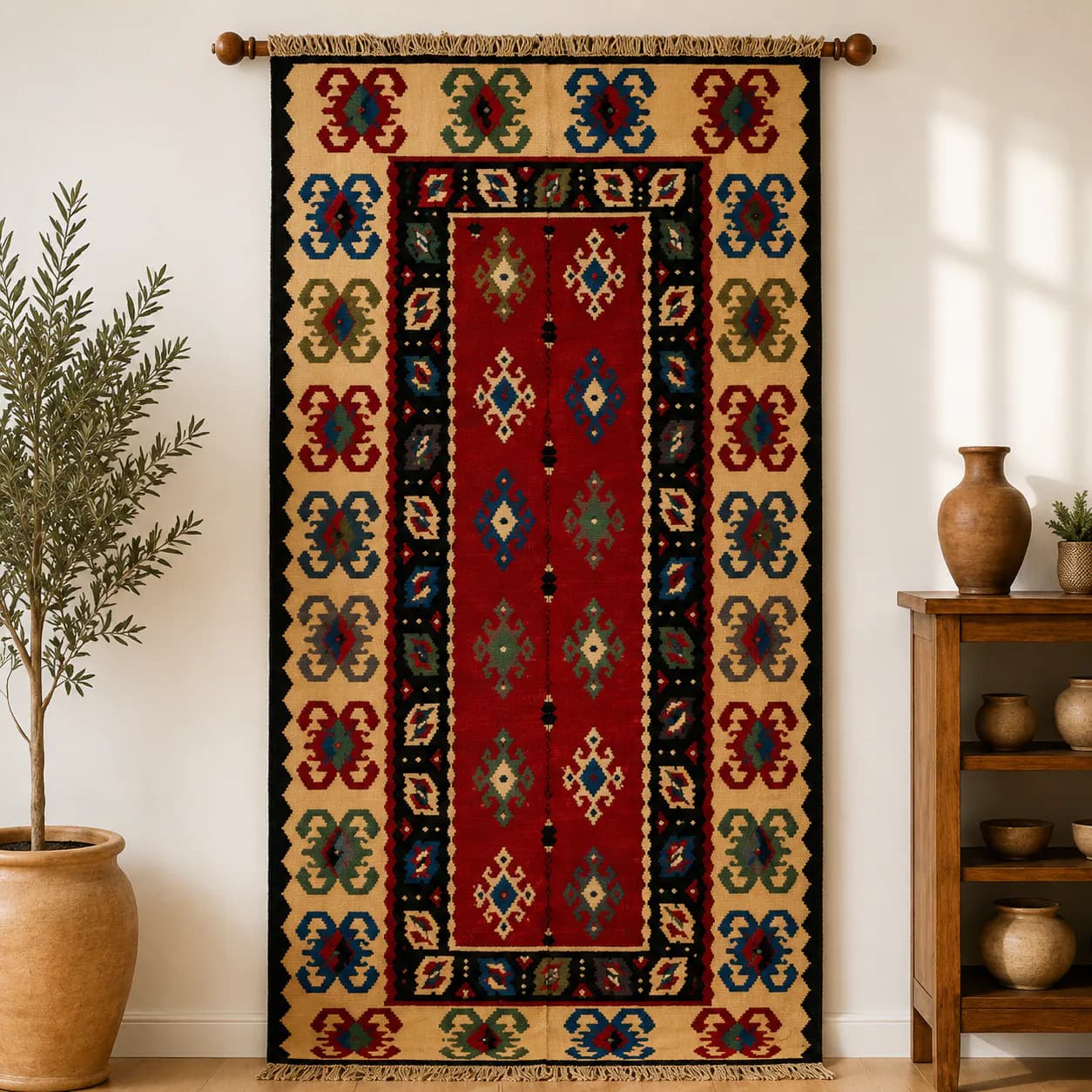
Afghanistan · 3'6" × 7'
Rs 35,000
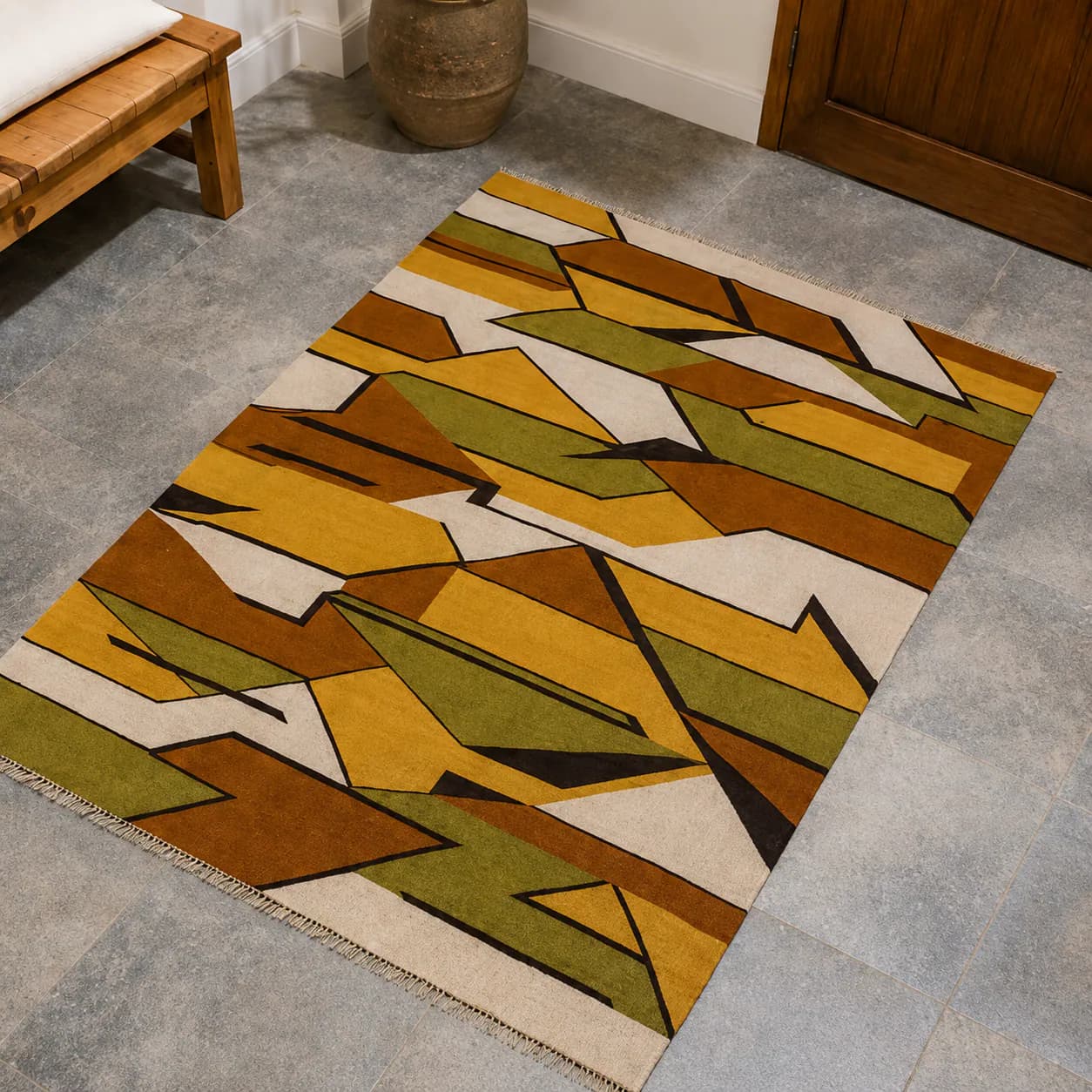
Afghanistan · 5' × 7'
Rs 50,000
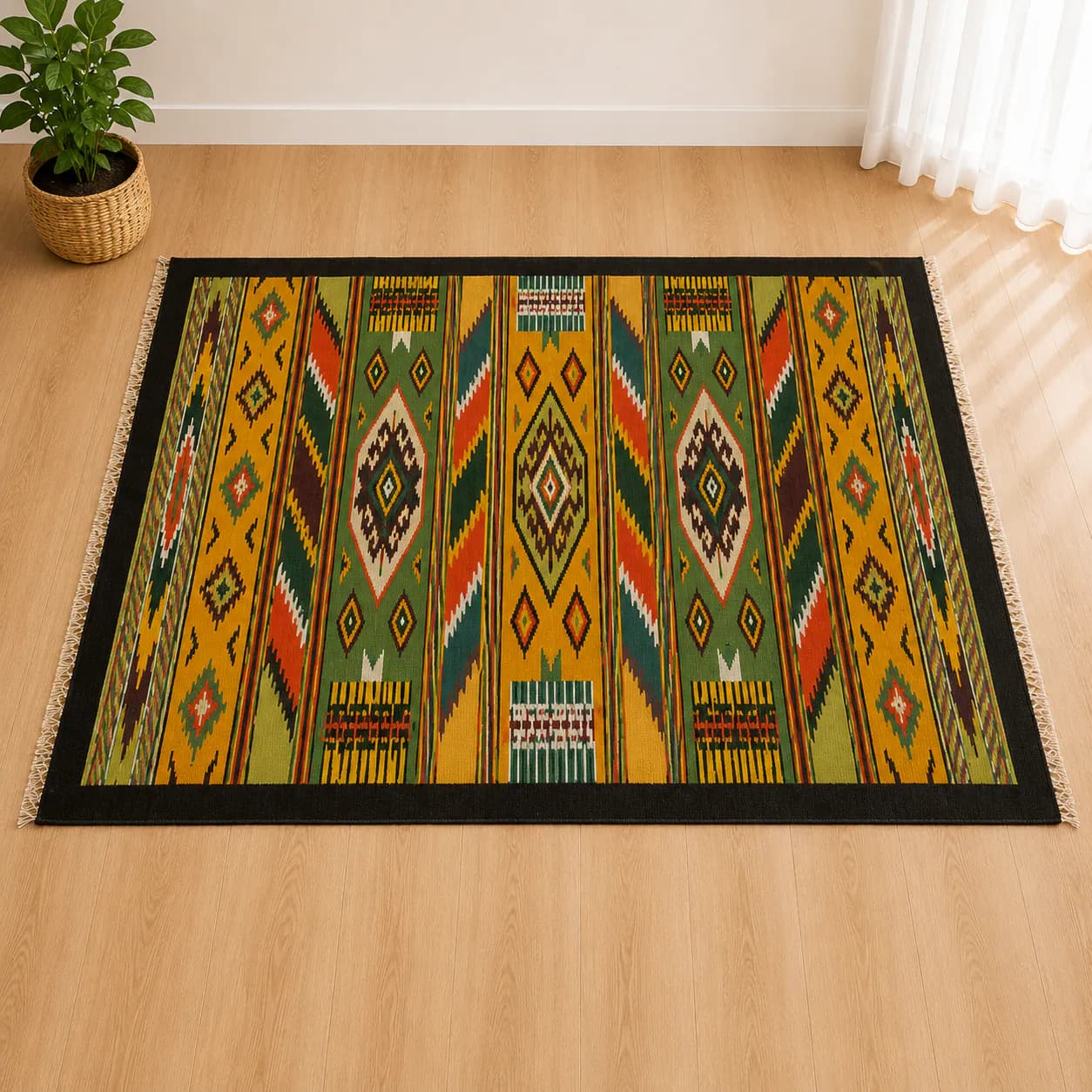
Pakistan · 5' × 7'
Rs 60,000
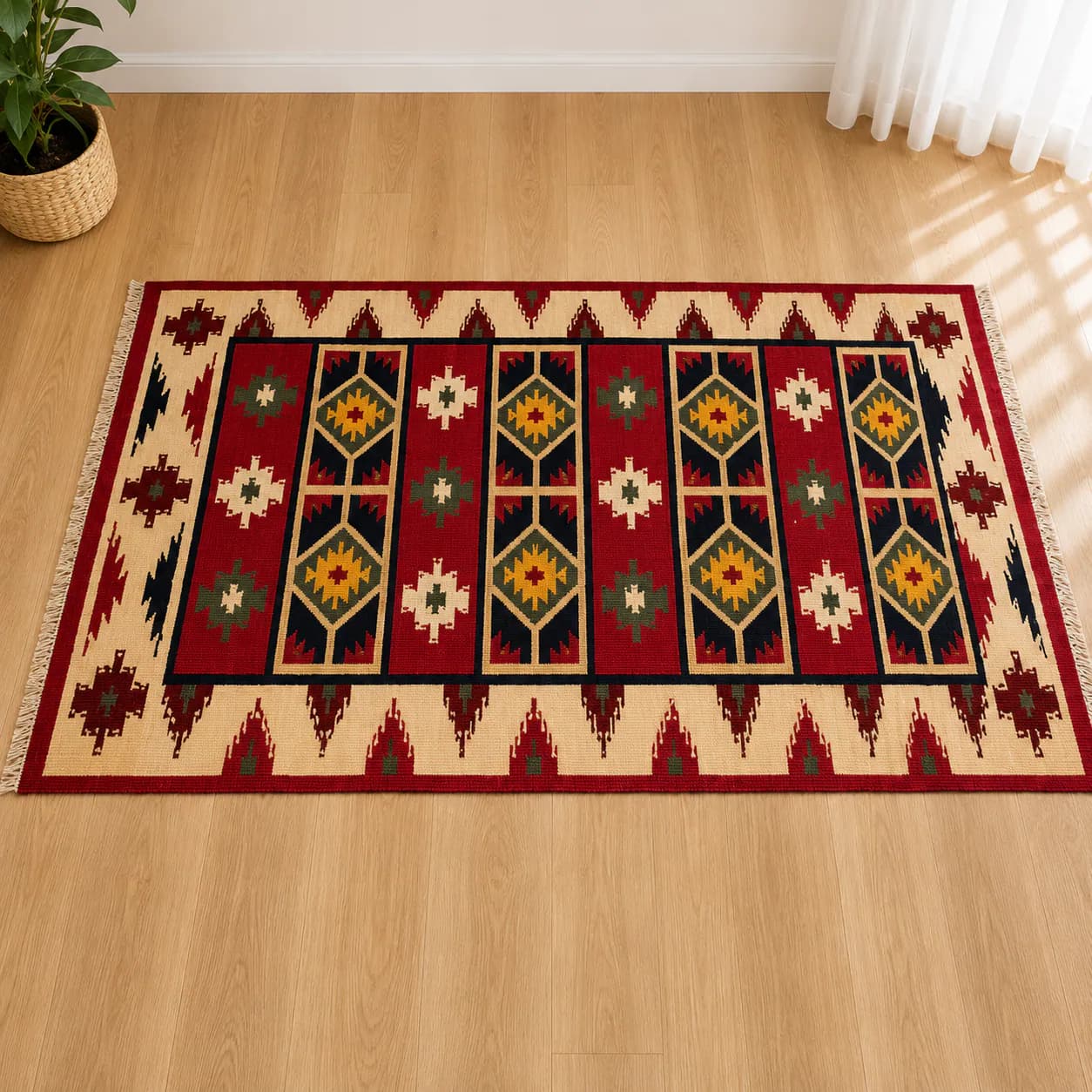
Turkey · 5' × 7'
Rs 50,000
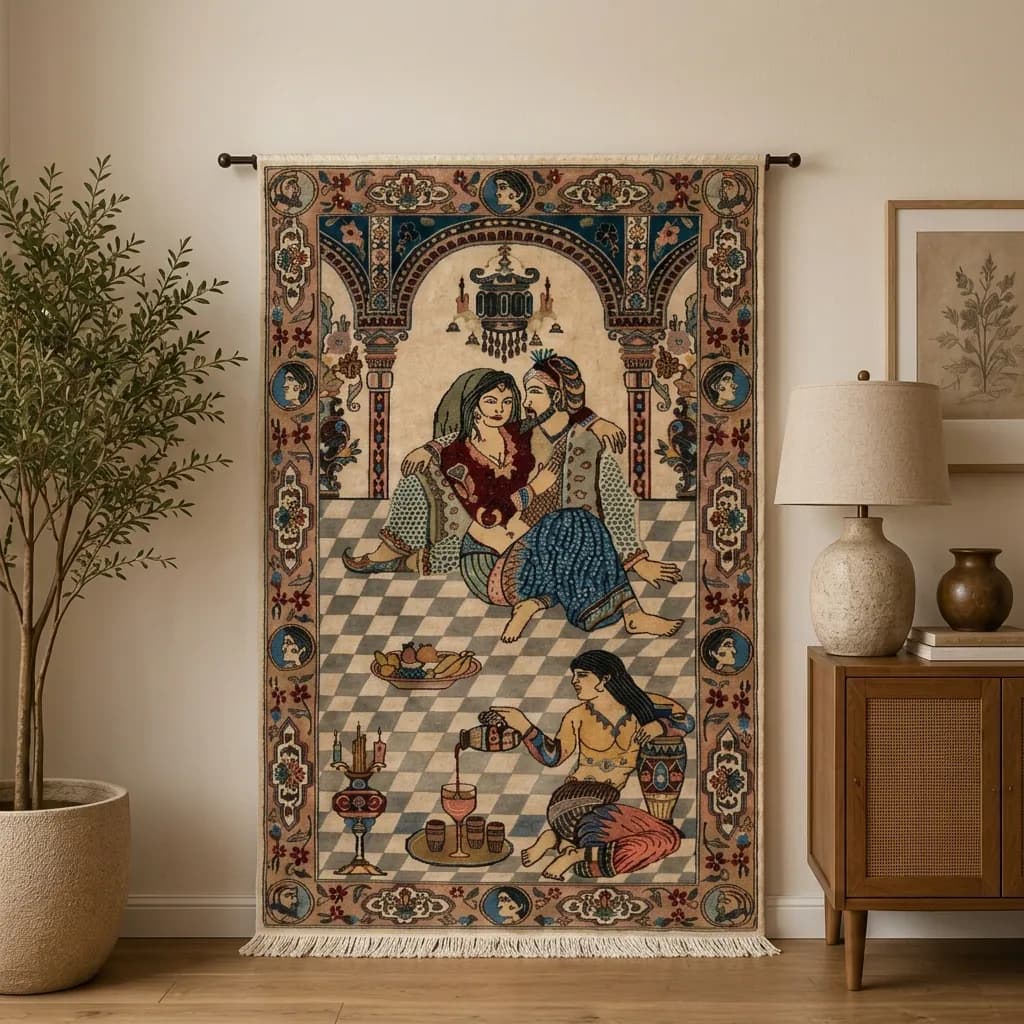
Southwestern Asia · 3' × 5'
Rs 250,000
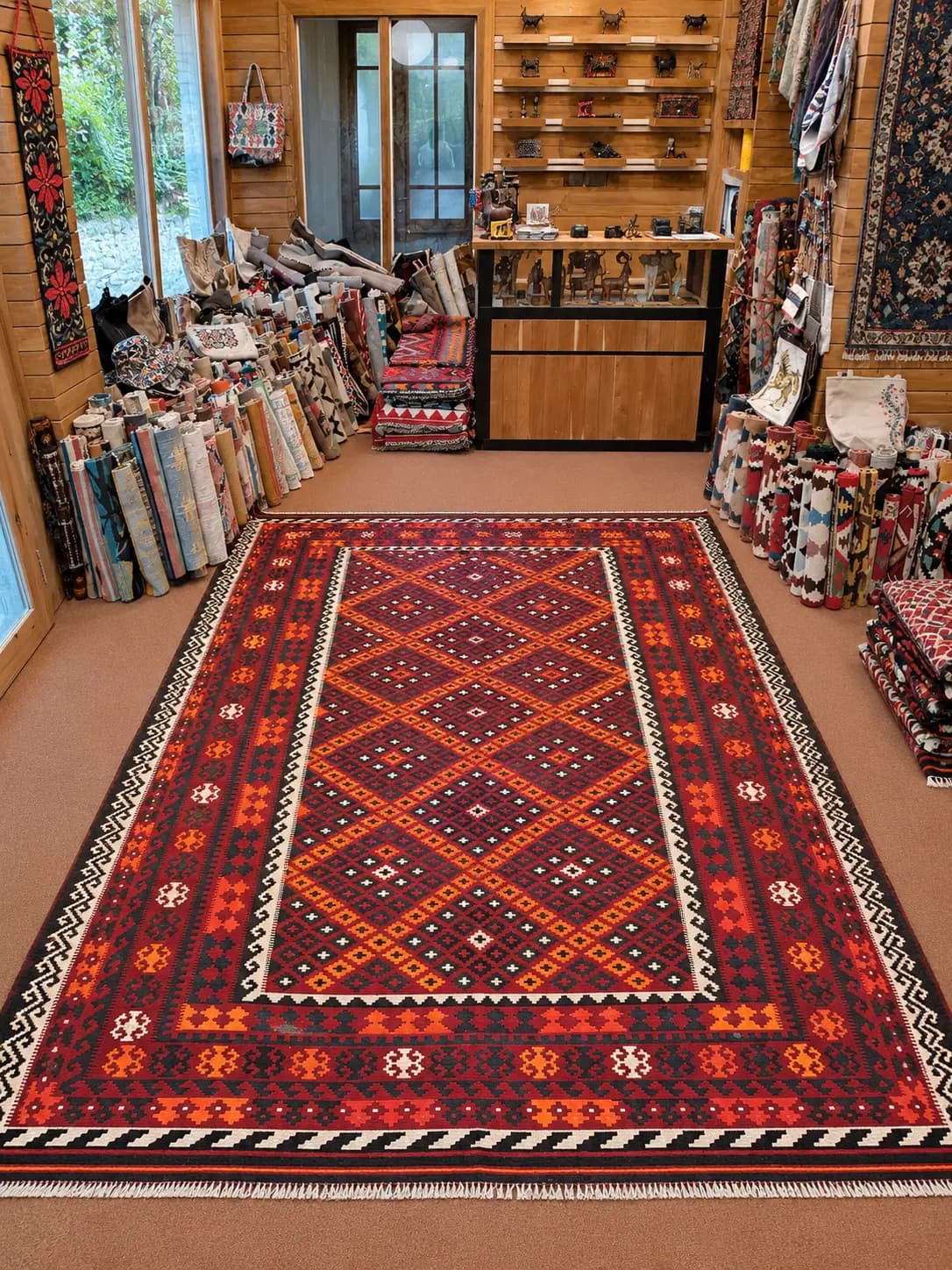
Southwestern Asia · 7' × 10'
Rs 120,000
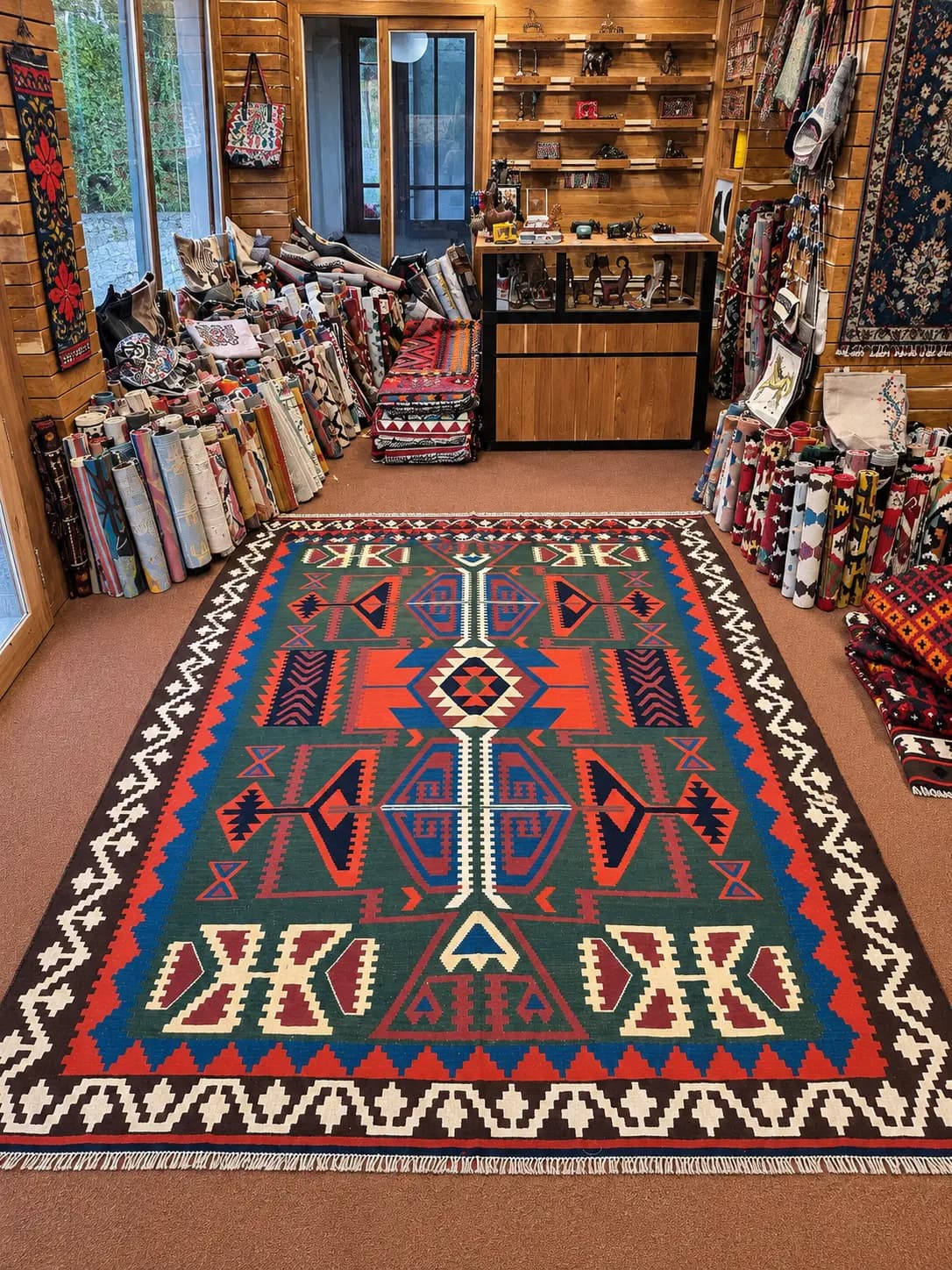
Afghanistan · 8' × 10'
Rs 150,000
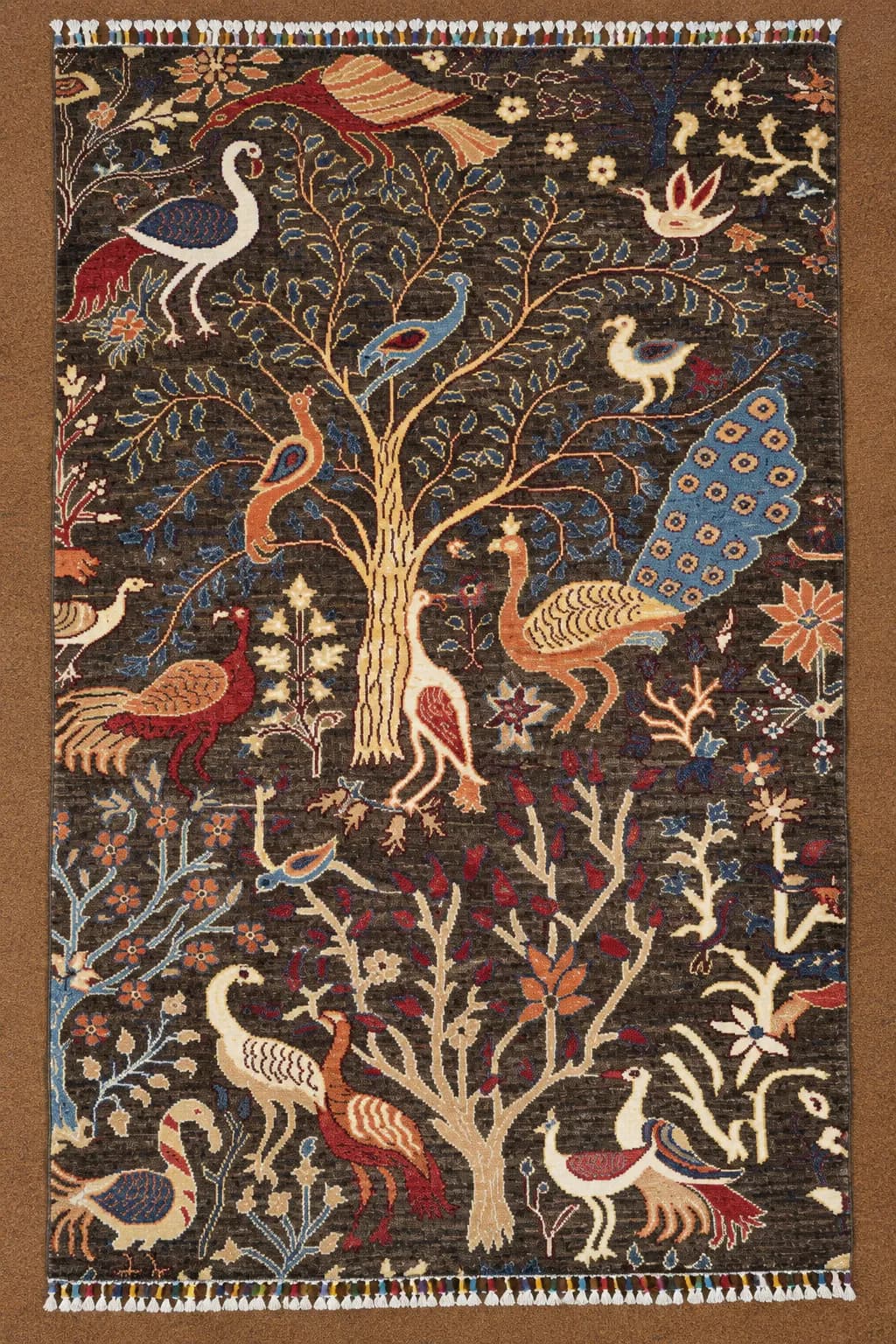
Buying guide
A kilim has no pile. The pattern is the structure: coloured weft threads packed down over the warp so tightly that the warp disappears, which is why a kilim is reversible and why the designs are geometric rather than curvilinear — a slit-weave loom cannot easily draw a curve.
They suit high-traffic rooms and households with animals, because there is no pile to crush and dirt does not bed into a nap. They are also the honest entry point to handmade textiles: a good kilim costs a fraction of a knotted carpet of the same size and takes a fraction of the time to weave, and neither fact is hidden here.
Look for tight, even beating — hold it to the light and the slits at colour changes should be short and regular. Long ragged slits mean a rushed weft.