How to buy a hand-knotted rug: size, weave, wool and knot count
Six questions decide almost every rug purchase. How big, how it was made, pile or flatweave, what it is made of, how fine the weave is — and how to check the listing is telling the truth.
Facts last checked
In short
How do you tell a hand-knotted rug from a tufted or machine-made one?
Turn it over. A hand-knotted rug shows the pattern on the back almost as clearly as the front, in thousands of small knot nodes, and its fringe is the warp running out of the rug itself. A tufted rug has a fabric backing glued on. A machine-made one is mechanically regular.
- Takes
- Ten seconds, on the back
- Needs
- No tools, no expertise
- Ask a seller for
- A photograph of the reverse
Six questions decide almost every rug purchase: how big, how it was made, pile or flatweave, what it is made of, how fine the weave is, and whether the thing in the listing is the thing that arrives. This guide answers them in that order. It is written by people who buy these pieces from the weavers, so where there is a trade habit of dressing something up, it is named.
What size rug does each room need?
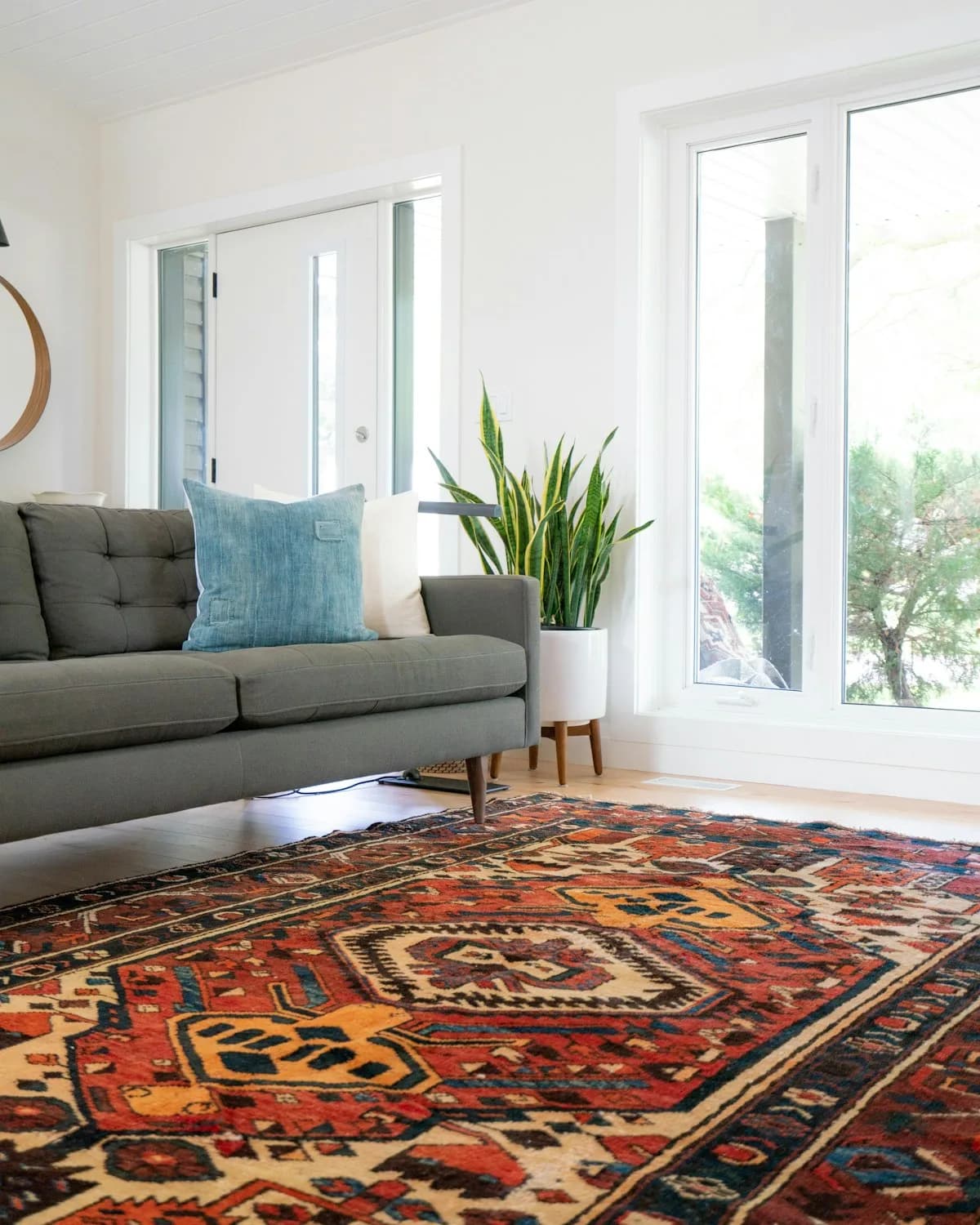
Size is the mistake that cannot be fixed later, and it is almost always a mistake in the same direction: too small. A rug that floats in the middle of a room with a gap of bare floor between it and every piece of furniture makes the room read smaller, not larger.
The rule that covers most rooms: the rug should be large enough that the front legs of the seating stand on it. That single decision ties the furniture into one group instead of leaving it stranded around an island.
| Room | What it has to reach | Usual size |
|---|---|---|
| Living room | Front legs of the sofa and both chairs, at minimum | 170 × 240 cm to 270 × 370 cm (5'6" × 8' to 9' × 12') |
| Dining room | 60–75 cm past the table edge on every side, so a pulled-out chair stays on the rug | Table length plus 120–150 cm |
| Bedroom | 45–60 cm of rug beyond the sides and foot of the bed | 170 × 240 cm for a double, 240 × 300 cm for a king |
| Hallway or beside a bed | Leave 10–20 cm of floor showing on each side | Runner, 80 × 300 cm |
Hand-knotted, hand-tufted or machine-made?
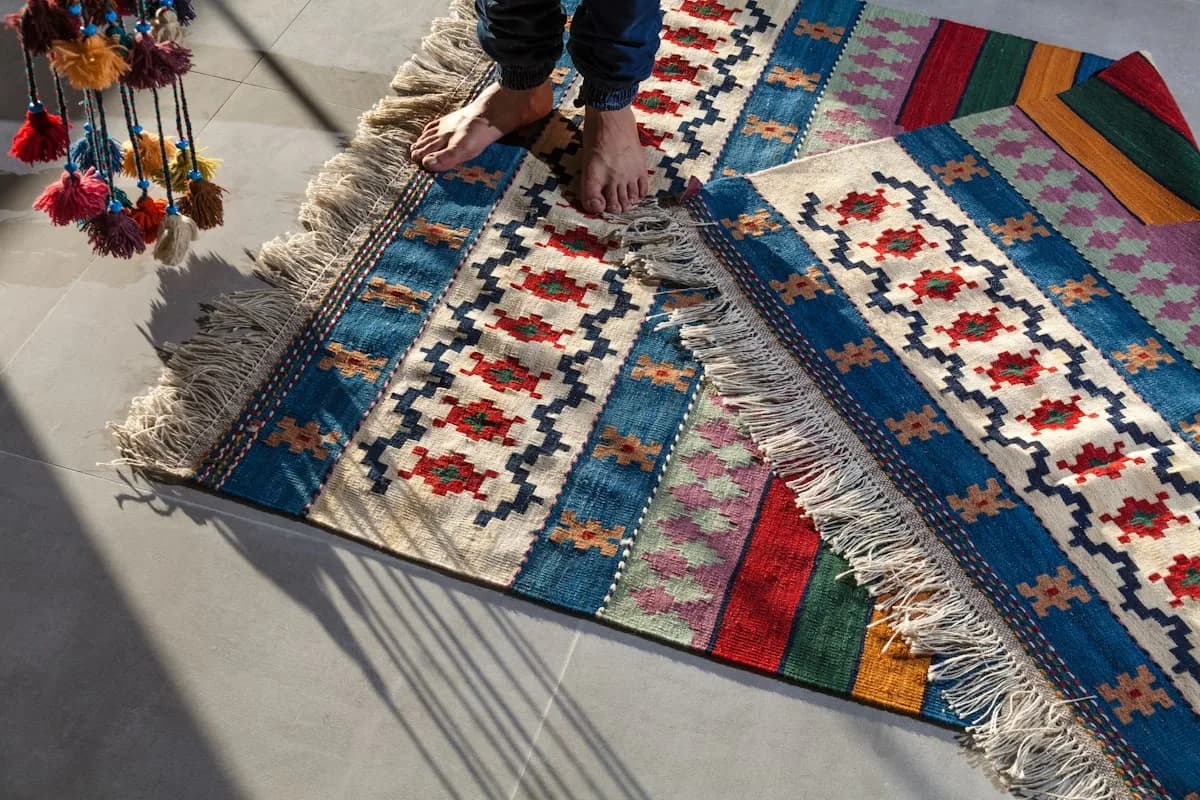
These three are sold beside each other at wildly different prices, and only one of them is a rug in the sense that lasts. The difference is visible in ten seconds if you know where to look, and the place to look is the back.
| Hand-knotted | Hand-tufted | Machine-made | |
|---|---|---|---|
| How it is made | Each knot tied by hand around the warp, row by row | Yarn punched through a backing cloth with a tufting gun | Woven on a power loom, hundreds of square metres a day |
| The back | The pattern, mirrored, in thousands of visible knots | A glued-on fabric or canvas backing hiding everything | Perfectly regular machine weave, often with a grid texture |
| The fringe | The warp itself, running out of the rug | Usually stitched on afterwards | Usually stitched or heat-sealed on |
| Time to make | Months to years for one piece | Days | Minutes |
| How it ages | Wears down slowly over generations; can be repaired | Latex adhesive hardens and crumbles, shedding as it goes | Fibres flatten and go shiny; not repairable |
| Resale | Holds value, sometimes gains it | Effectively none | None |
Kilim or carpet — which suits the room?
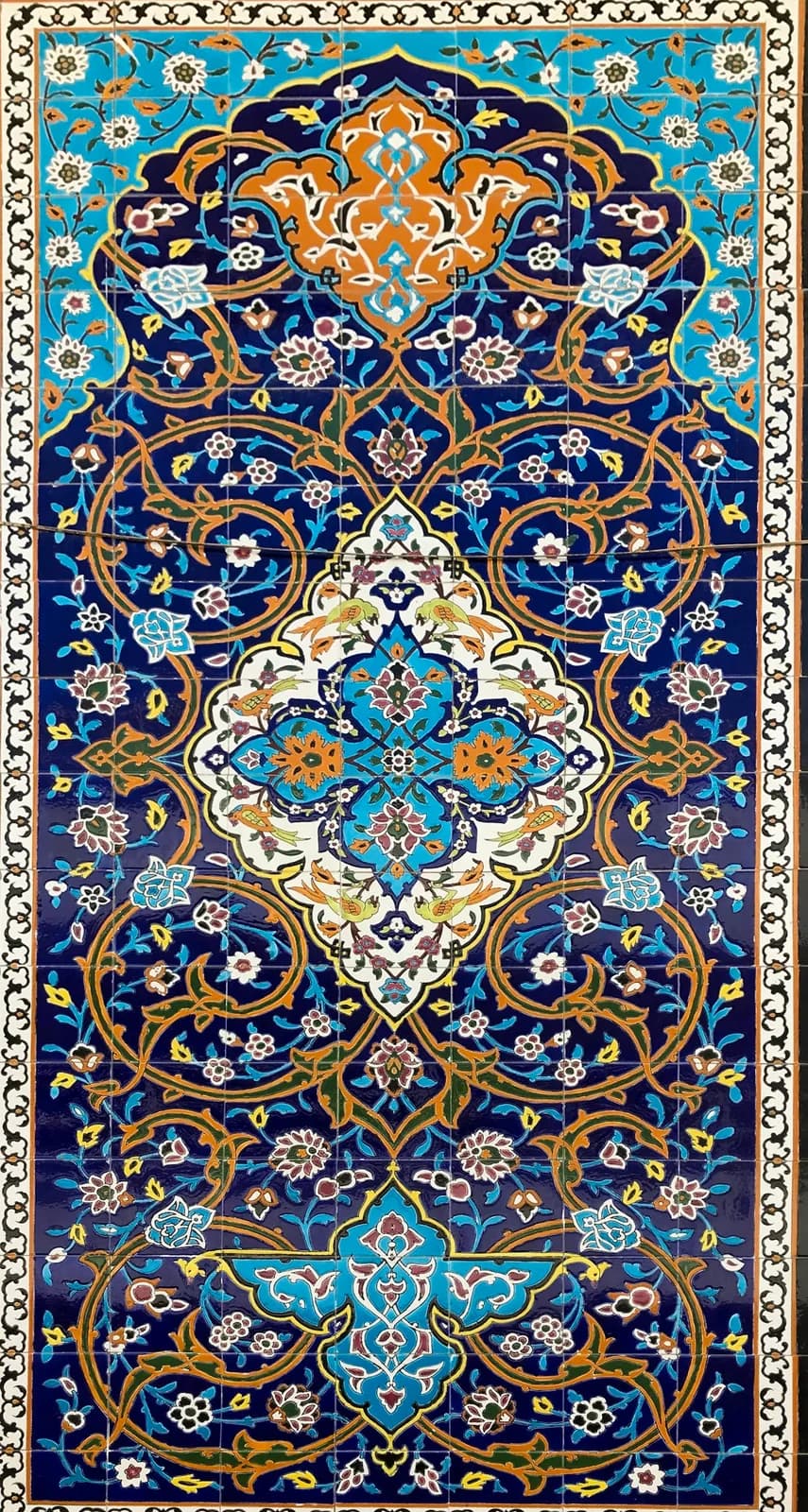
A carpet has a pile: knots tied and cut so the surface stands up. A kilim is a flatweave with no pile at all — the pattern is the structure, the weft packed down so tightly over the warp that it makes the cloth. Both are woven by hand, and one is not a cheaper imitation of the other.
- A kilim is reversible, thin and light. It layers over a larger rug, travels well, and costs meaningfully less per square metre because a flatweave takes weeks rather than months.
- A kilim underfoot is firm, not soft. In a bedroom, where the first step of the day lands, most people want pile.
- Pile insulates and absorbs sound. In a room with hard floors and hard walls, a knotted carpet does more for the acoustics than anything else you can put in it.
- Flatweave suits high traffic and chairs. Dining chairs drag over a kilim without catching, and there is no pile to crush under a table leg.
Wool, silk, or a wool and silk blend
Wool is the material almost every rug worth owning is made of. It is springy enough to recover from a furniture leg, and the lanolin still in a hand-spun yarn resists spills long enough to blot them. It also takes natural dye beautifully and fades slowly and evenly rather than patchily.
Silk is a different proposition. It takes far finer detail than wool can hold and it changes colour as you walk around it, because the fibre reflects light directionally. It is also weaker underfoot and shows every footprint. Silk belongs on a wall, in a low-traffic room, or as a highlight — a few grams of it picking out a border on a wool ground.
Choosing by material
- Wool
- Resilient, forgiving, ages well. The default, and rightly.
- Silk
- Fine detail and lustre. Low traffic or wall-hung.
- Wool with silk highlights
- Wool's durability, silk's sheen where the design needs it.
- Cotton
- Usually the foundation — warp and weft — rather than the pile.
How to read a knot count
Knot density is written as KPSI — knots per square inch. You measure it on the back: count the knots along one inch horizontally, count them along one inch vertically, multiply. A weaver's own count is quoted the same way, and any seller who knows their stock can tell you the number without going to look.
What a number actually means
- 80–150 KPSI
- Village and tribal weaving. Bold geometry, heavy wool, hard-wearing.
- 150–250 KPSI
- The broad middle. Curves and floral detail become possible.
- 250–400 KPSI
- Workshop weaving. Fine drawing, thinner pile, slower to make.
- 400 KPSI and above
- Usually silk or wool-and-silk. Wool alone cannot be spun fine enough to go much past this.
Here is what the number does not mean: better. A high knot count lets a design carry finer detail, and that is all it lets it do. A bold geometric weave at 120 KPSI is not a failed attempt at 300 — it is a different design tradition, in heavier wool, that will outlast the fine piece underfoot. Match the count to the design, not to the price tag.
How to check a rug is what the listing says
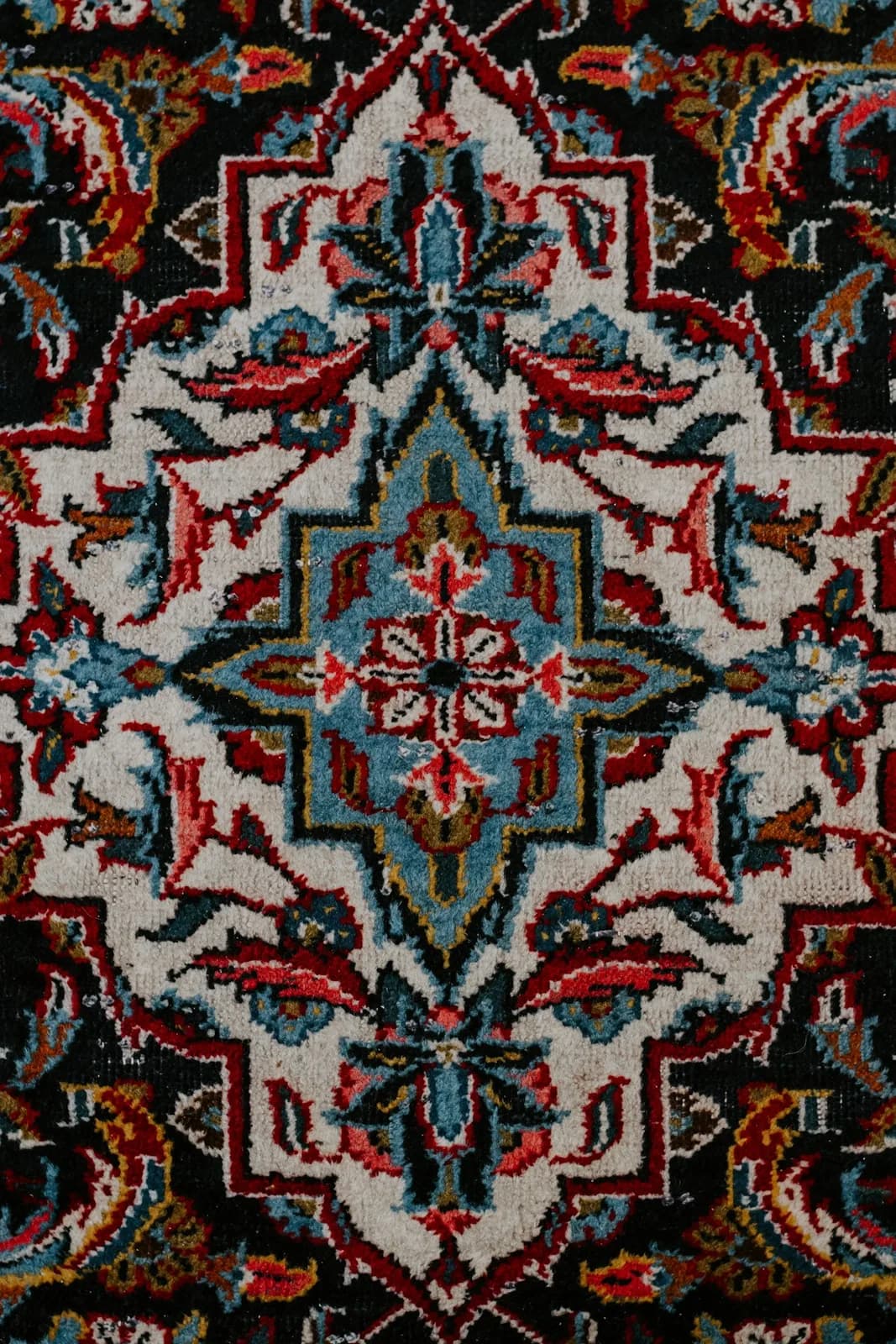
Most misrepresentation online is not an outright lie. It is a place name attached to a rug woven somewhere else entirely, a construction left unstated, or a material named loosely enough to cover two very different fibres. Six checks catch nearly all of it.
- Ask for the back. Knots and a warp fringe, or a glued backing. This one check settles construction entirely.
- Ask where it was woven, and expect a region rather than a continent. “Southwestern Asian design” describes a pattern tradition. It is not a provenance, and a seller who only offers the style name may not know the origin.
- Ask for the knot count. Not because high is good, but because a seller who cannot produce a number has not examined the piece.
- Ask what the foundation is. Cotton, wool or silk warp changes how the rug lies, what it costs and how it should be washed.
- Do the arithmetic per square metre. Divide the price by the area. A hand-knotted piece priced like a machine-made one is a machine-made one, or the description is wrong somewhere else.
- On a vintage or antique piece, ask what the wear is. Every old rug has some. A condition report that mentions none has not been written honestly.
Questions we are asked before a first purchase
- Is a higher knot count always better?
- No. A higher count allows finer detail and nothing else. A geometric village weave at 120 KPSI is heavier, harder-wearing and correct for its design; a fine floral piece needs 250 KPSI or more to draw its curves. Match the count to the design.
- What size rug do I need for a living room?
- Large enough that at least the front legs of every seat stand on it. For most sitting rooms that is 170 × 240 cm upward, and 270 × 370 cm where the seating is arranged around a coffee table.
- Are kilims cheaper than knotted carpets?
- Per square metre, yes, and for a straightforward reason: a flatweave takes weeks where a knotted carpet of the same size takes months. It is a difference in labour, not in quality of making.
- How can I tell hand-knotted from hand-tufted online?
- Ask the seller for a photograph of the back. Hand-knotted shows the pattern in individual knots with the fringe running out of the warp. Hand-tufted shows a fabric backing glued over the work.
- Is silk worth paying for?
- In a low-traffic room or on a wall, yes — nothing else holds that level of detail or changes colour as you move around it. Underfoot in a family room, wool will serve you better and look better in ten years.
Filed under
